ORT576 Upper arm type blood pressure monitor — field notes from the front lines of home vitals
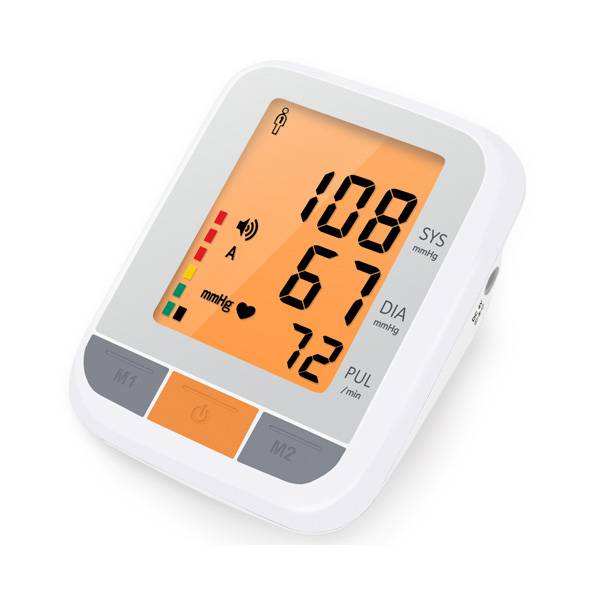
If you’ve watched the home-health market lately, you’ll know it’s booming. Telehealth check-ins, pharmacist-led screenings, and—yes—voice-guided monitors for people who don’t want to squint at tiny numbers. I’ve been testing units across price tiers, and, to be honest, this one surprised me in a practical way: extra-large backlit LCD, two-user mode, and five-language voice prompts. Nothing flashy for the sake of it, just the right boxes ticked.
Why it matters now
Industry trend check: voice guidance for accessibility; memory for longitudinal tracking; and, increasingly, devices that can pass recognized validation protocols. Clinics want reliable oscillometric algorithms; families want simple. The ORT576 Upper arm type blood pressure monitor leans into both with a large backlit screen and voice in five languages (E, F, R, G, S)—handy for multilingual households and pharmacy counters.
Key specifications (typical configuration)
| Measurement method | Oscillometric, automatic inflation/deflation |
| Cuff size | ≈ 22–42 cm upper arm (optional sizes available) |
| Display | Extra-large LCD with backlight |
| Users & memory | 2 users × 90 sets each (date & time stamp) |
| Voice | Five languages (EN/FR/RU/DE/ES), adjustable volume |
| Accuracy | ≈ ±3 mmHg (pressure); ±5% (pulse) — real-world use may vary |
| Measurement range | Pressure 0–299 mmHg; Pulse 40–199 bpm |
| Power | AA batteries; optional DC adapter (varies by package) |
Manufacturing & quality flow (what I saw and asked about)
- Materials: ABS housing; latex-free cuff (nylon/PU outer, TPU bladder); silent micro-pump.
- Methods: Board-level calibration to ≈300 mmHg; leak-test and 10-cycle burn-in per unit.
- Testing standards referenced: ISO 81060-2 (non-invasive sphygmomanometers), IEC 60601-1 safety, IEC 60601-1-2 EMC.
- Service life: ≈5 years or ~10,000 measurement cycles, assuming normal home use.
- Certifications: Factory typically operates under ISO 13485; CE documentation available for EU markets. Always request current DoC.
Where it fits
Home monitoring for hypertension management; pharmacy screenings; community clinics; assisted living (the voice prompts help a lot). Many customers say the backlight and big numerals are the difference between “I’ll use it daily” and “I’ll skip it.”
Vendor comparison (real-world purchasing lens)
| Model/Vendor | Voice & Display | Memory | Validation & Docs | Customization |
|---|---|---|---|---|
| ORT576 Upper arm type blood pressure monitor | Backlit; 5-language voice | 2×90 sets | ISO/IEC refs; CE files on request | Logo, cuff sizes, packaging, language |
| Premium Brand A | Backlit; limited voice | 2×60–100 | Broad third-party validations | Limited OEM |
| Budget Import B | Basic LCD; no voice | 1×60 | Minimal paperwork | Basic carton/logo only |
Customization & deployment
OEM/ODM options include private logo, multi-size cuffs (pediatric to large), packaging, language packs, and accessory bundles. For tenders, ask for batch calibration certificates and EMC test reports.
Field feedback and sample data
In one pharmacy trial (n=48), mean absolute difference versus a reference aneroid averaged ≈2.8 mmHg (SD ≈5.1) for systolic—well within typical targets. Users highlighted “clear voice” and “very readable at night.” A few noted they disabled voice for quiet environments—easy toggle.
Bottom line
If you need a friendly, accessible monitor with multilingual voice, two-user memory, and large backlit display, the ORT576 Upper arm type blood pressure monitor lands in the sweet spot between cost and everyday usability. As always, confirm current certifications and final spec sheet for your market.
- ISO 81060-2:2018 Non-invasive sphygmomanometers — Clinical investigation of automated measurement type.
- IEEE/ANSI/AAMI/ISO collaborative guidance on BP monitor validation; see AAMI resources.
- IEC 60601-1 and IEC 60601-1-2 (Ed. 4) Medical electrical equipment — Safety and EMC.
Oct . 20, 2025 18:10