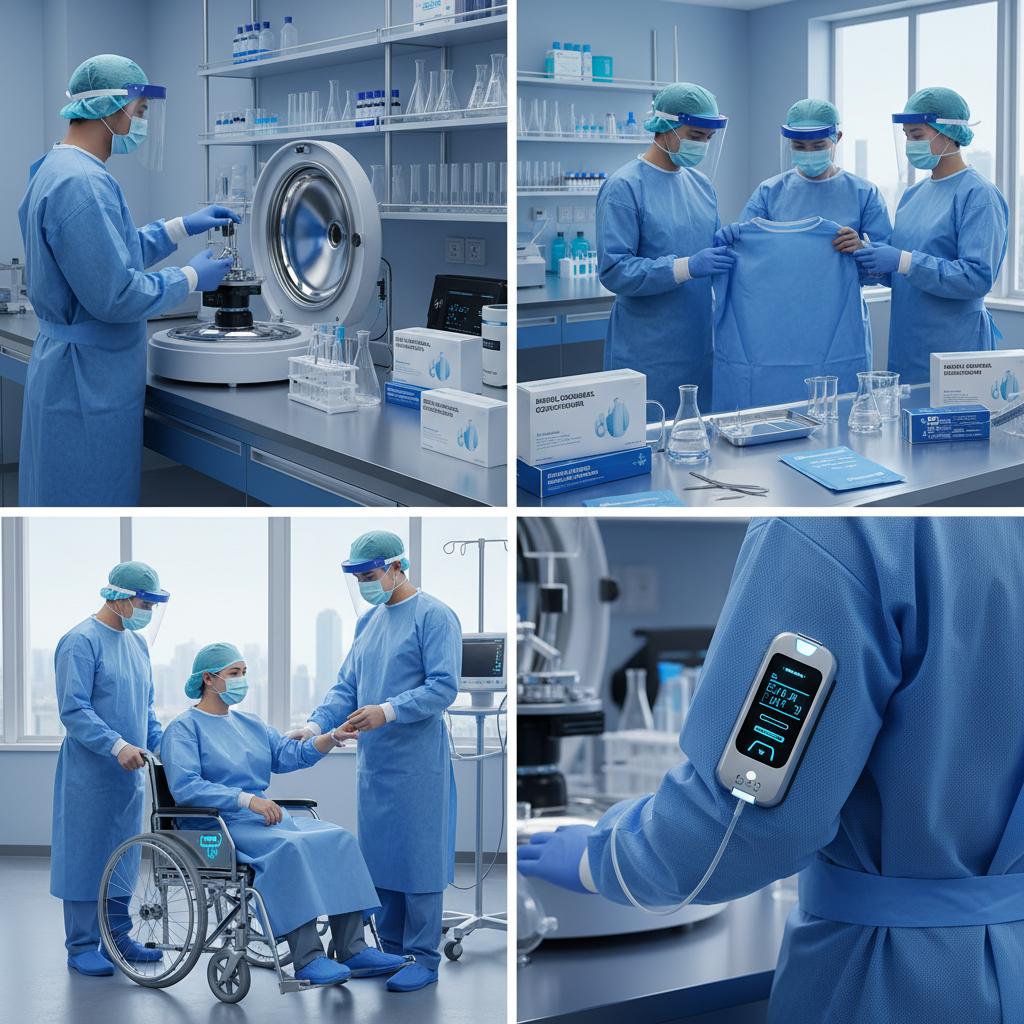
Selecting a reliable disposable gown manufacturer is no longer just about finding the lowest unit price, but about balancing fluid resistance, breathability, and stringent regulatory compliance. In the modern medical environment, the protective barrier serves as the first line of defense against cross-contamination, making the technical specifications of the material more critical than the brand name itself.
Healthcare procurement officers often face a dilemma between cost-efficiency and patient safety. When sourcing protective apparel, the shift toward high-performance non-woven fabrics like SMS (Spunbond-Meltblown-Spunbond) has redefined the expectations for a professional supplier, demanding higher transparency in certification and production stability.
This analysis explores the essential criteria for evaluating a manufacturing partner, the technical trade-offs in material selection, and how integrated medical suppliers like Hebei OrientMed bridge the gap between industrial capacity and clinical requirements to ensure a steady supply chain of medical protective series.

The Strategic Role of Protective Apparel in Infection Control

Disposable gowns are engineered to create a physical barrier between the wearer and potentially infectious materials. Unlike reusable linens, disposable options eliminate the risk of laundry-based cross-contamination and reduce the operational overhead of sterilization cycles in high-turnover clinical settings.
The effectiveness of these garments depends heavily on the manufacturer's ability to control the pore size of the non-woven fabric. A professional disposable gown manufacturer must ensure that the material is hydrophobic enough to repel fluids while remaining breathable to prevent heat stress for the medical staff during long surgical procedures.
Beyond the garment itself, the integration of a comprehensive product portfolio—including medical tape, surgical sutures, and sterilization wrapping—allows healthcare facilities to standardize their procurement, ensuring that all protective elements work in synergy to maintain a sterile field.
Critical Material Specifications for High-Performance Disposable Gowns
The technical superiority of a gown is determined by its fabric composition. SMS fabric, a composite of spunbond and meltblown layers, is the industry standard because it combines the strength of spunbond with the filtration efficiency of meltblown fibers.
Key metrics include the Hydrostatic Head (HH), which measures the pressure at which water penetrates the fabric, and the Breathability Rating (MVTR). A high-quality manufacturer optimizes these two conflicting properties to ensure the gown is "water-proof yet air-permeable."
Furthermore, the sealing method—whether using ultrasonic welding or thermal bonding—impacts the leak-proof nature of the seams. Poorly sealed seams can become the weakest point in a protective barrier, rendering the most expensive fabric useless in a high-fluid environment.
Clinical Application Scenarios and Barrier Level Requirements
Not all medical procedures require the same level of protection. The industry typically categorizes gowns into levels (AAMI levels), where Level 1 is for minimal risk and Level 4 is for high-fluid, high-risk surgical environments.
In general wards or during routine examinations, low-density polyethylene (LDPE) or light spunbond materials are sufficient. However, in the operating theater, gowns must be reinforced at the cuffs and forearms—the areas most likely to encounter fluid strikes—using higher GSM (grams per square meter) fabric.
The choice of gown must also consider the environment's humidity and temperature. For instance, in dermatology or general clinics, comfort and mobility are prioritized, whereas in infectious disease units, total fluid impermeability is the non-negotiable priority.
Evaluating Manufacturing Quality via Performance Benchmarks
Quantitative benchmarks are the only objective way to compare different manufacturers. When auditing a supplier, procurement teams should look at the consistency of fabric weight and the stability of the fluid barrier across different production batches.
The following data illustrates a comparative analysis between generic non-woven gowns and those produced under strict ISO13485 quality management systems, focusing on critical protection and comfort indices.
disposable gown manufacturer Performance Metrics
As shown, the adherence to certified manufacturing standards significantly boosts fluid resistance and seam strength, reducing the risk of barrier failure during critical surgical interventions.
Procurement Framework for Evaluating Medical Protective Suppliers
A robust procurement strategy requires looking beyond the product sample. The manufacturer's ability to maintain a professional registration team is a key indicator of their capability to navigate international MOH (Ministry of Health) requirements, which speeds up the import process for global buyers.
Buyers should verify CE and ISO13485 certifications to ensure that the production environment meets global hygiene standards. A manufacturer that manages an extensive range of complementary products—from hypodermic products to medical protective series—typically offers better logistical consolidation and more stable pricing.
Operational transparency, such as providing detailed technical data sheets (TDS) and certificates of analysis (COA) for every batch, distinguishes a professional medical supplier from a general textile factory.
Sustainability Trends in Non-Woven Medical Textile Production
The medical industry is facing increasing pressure to reduce the environmental footprint of disposable plastics. This is leading to the emergence of biodegradable non-woven materials that maintain the same barrier properties as polypropylene but decompose more efficiently.
Manufacturers are likely to adopt "green development" strategies, focusing on energy-saving production processes and the reduction of volatile organic compounds (VOCs) during the melt-blowing stage. This shift is expected to align medical necessity with environmental responsibility.
Future innovations may include smart fabrics that can signal barrier compromise through color changes, although these technologies depend on further cost reductions to become viable for mass-market disposable gowns.
Comparative Matrix for Selecting Protective Gown Categories
Choosing the right gown requires a precise match between the procedure's risk profile and the garment's specifications. The following matrix provides a decision-support framework for procurement officers.
By analyzing the trade-off between protection levels and costs, facilities can optimize their inventory to ensure high-risk areas are fully protected without overspending on low-risk environments.
| Gown Material | Barrier Level | Primary Use Case | Key Limitation |
|---|---|---|---|
| Spunbond Polypropylene | Low (Level 1) | Routine Exams/Clinics | Low Fluid Resistance |
| SMS Composite | Medium (Level 2) | General Surgery/Dental | Moderate Permeability |
| SMMS Reinforced | High (Level 3) | High-Fluid Procedures | Reduced Breathability |
| Laminated Film | Maximum (Level 4) | Infectious Disease/OR | High Heat Retention |
| PE-Coated Non-woven | Medium-High | Laboratory/Phlebotomy | Stiff Fabric Feel |
| Biodegradable PLA | Variable | Eco-conscious Clinics | Higher Unit Cost |
Ultimately, the ideal selection depends on the specific clinical workflow and the available budget. For those seeking a one-stop disposable medical products supplier, exploring the full range of protective series at www.orientmedicare.com can provide the necessary variety to cover all facility needs.
Frequently Asked Questions
Conclusion
The selection of a disposable gown manufacturer is a critical decision that directly impacts the safety of the clinical environment. By prioritizing material science, regulatory certifications, and supplier agility over mere cost, healthcare facilities can ensure a resilient defense against infection.
As the industry moves toward more sustainable and intelligent protective textiles, partnering with an experienced supplier like Hebei OrientMed ensures access to both current standards and future innovations. Professionals evaluating their protective apparel strategy can review detailed product specifications and corporate capabilities at www.orientmedicare.com.