Disposable isolation gowns bulk are essential components in infection control, playing a crucial role in safeguarding healthcare professionals, patients, and the wider community. The global demand for these gowns has dramatically increased due to events like the COVID-19 pandemic, highlighting the importance of readily available and reliable supply chains. Understanding the nuances of disposable isolation gowns bulk – from their material composition and manufacturing processes to regulatory standards and practical applications – is paramount for effective public health preparedness and response.
The market for disposable isolation gowns bulk is driven by factors like increasing healthcare expenditures, rising awareness of healthcare-associated infections (HAIs), and stringent regulatory requirements. The ability to rapidly deploy large quantities of these gowns during emergencies, such as outbreaks or natural disasters, is a key concern for healthcare facilities and governments alike. Consequently, sourcing and managing disposable isolation gowns bulk effectively is a critical operational challenge.
Investing in quality disposable isolation gowns bulk isn't merely a logistical matter; it's a commitment to patient and staff safety, compliance with healthcare standards, and responsible resource management. A robust understanding of the industry, potential risks, and available solutions allows organizations to make informed decisions, ensuring a consistent supply of protective equipment when and where it’s needed most.
Introduction: Global or Industry Context
The global market for disposable isolation gowns bulk has experienced unprecedented growth in recent years, fueled by increasing healthcare needs and heightened awareness of infectious disease control. According to the World Health Organization (WHO), adequate personal protective equipment (PPE), including isolation gowns, is critical for preventing the spread of infections in healthcare settings. The UN has also emphasized the importance of equitable access to PPE during public health emergencies, highlighting the need for robust supply chains.
The demand for disposable isolation gowns bulk isn't limited to healthcare; industries like food processing, pharmaceutical manufacturing, and research laboratories also rely on these gowns to maintain sterile environments. Supply chain disruptions, as witnessed during the COVID-19 pandemic, underscored the vulnerabilities in relying on concentrated sourcing and the importance of diversified suppliers. ISO standards play a vital role in ensuring quality and consistency across different manufacturers.
A significant challenge lies in balancing the escalating demand with sustainable production practices. Traditional manufacturing processes can have environmental impacts, leading to a growing focus on eco-friendly materials and responsible disposal methods. Furthermore, ensuring fair labor practices and ethical sourcing throughout the supply chain remains a critical concern for businesses and consumers alike.
Definition & Meaning
Disposable isolation gowns bulk refer to a large quantity of single-use garments designed to protect both healthcare professionals and patients from the transfer of microorganisms and body fluids. These gowns typically cover the body from neck to knee, providing a barrier against contamination. They are categorized by protection level (Levels 1-4) based on their resistance to fluids, impact, and penetration, as defined by standards like ASTM F2100.
The significance of these gowns extends beyond merely preventing the spread of infections. They contribute to a sense of security and confidence for healthcare workers, allowing them to focus on patient care without undue concern for personal safety. In the context of modern healthcare, particularly with the rise of antimicrobial resistance, rigorous infection control protocols – including the use of effective isolation gowns – are essential for preserving the efficacy of available treatments.
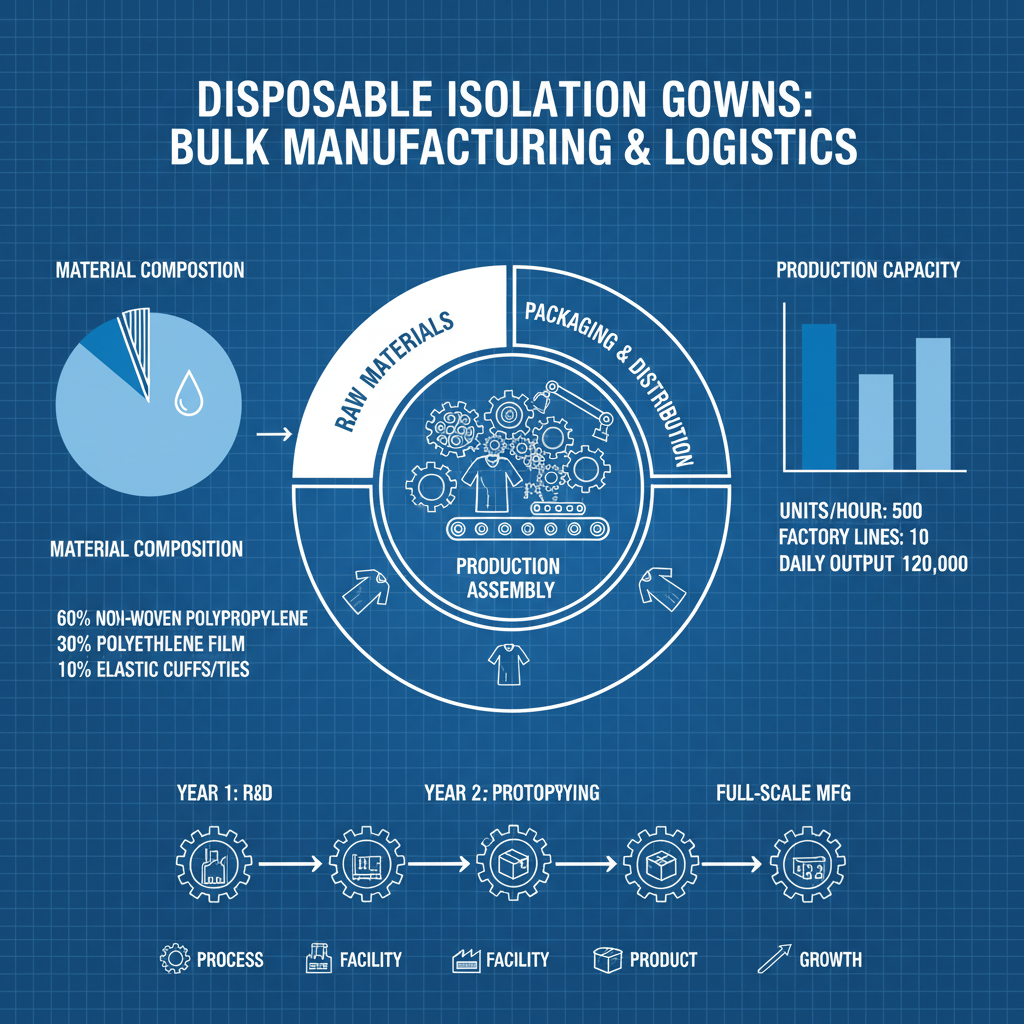
The term 'bulk' implies large-scale purchasing, often directly from manufacturers or wholesale distributors, to achieve cost efficiencies and ensure a consistent supply. Strategic stockpiling of disposable isolation gowns bulk is a common practice for hospitals and healthcare systems, enabling them to respond effectively to unexpected surges in demand or emergency situations.
Key Factors or Core Components
Durability: The strength and resistance to tears of an isolation gown are critical. Gowns must withstand the rigors of daily use without compromising their protective barrier. Materials like polypropylene are often chosen for their robust properties.
Fluid Resistance: The ability of a gown to prevent fluid penetration is paramount in protecting against infectious agents. This is determined by testing methods like hydrostatic pressure and impact penetration resistance, and is a key factor in classifying gowns by protection level.
Comfort & Breathability: Healthcare professionals often wear isolation gowns for extended periods, making comfort and breathability important considerations. Materials that allow for airflow can help reduce heat buildup and improve compliance.
Scalability of Supply: The ability to rapidly scale up production and distribution is crucial during public health emergencies. Manufacturers with established supply chains and production capacity are preferred.
Cost-Effectiveness: Balancing quality with affordability is a key challenge. Bulk purchasing and strategic sourcing can help optimize costs without compromising on essential protective features.
Compliance & Certification: Gowns must meet relevant regulatory standards (e.g., FDA, CE marking) and certifications (e.g., ISO 13485) to ensure quality and safety.
Global Applications & Use Cases
Disposable isolation gowns bulk find application in a wide range of healthcare settings, including hospitals, clinics, surgical centers, and long-term care facilities. They are used to protect healthcare workers during procedures that pose a risk of exposure to infectious materials, such as wound care, catheter insertion, and respiratory treatments.
Beyond healthcare, these gowns are utilized in industries requiring strict hygiene protocols. For instance, in the food processing industry, they prevent contamination of food products. Pharmaceutical manufacturing uses them to maintain sterile environments during drug production. In remote industrial zones with limited access to laundry facilities, bulk disposable gowns offer a practical solution for worker protection.
In post-disaster relief operations, where access to clean water and laundry services may be limited, disposable isolation gowns bulk are invaluable for preventing the spread of infectious diseases among aid workers and affected populations. Organizations like the Red Cross and Doctors Without Borders routinely rely on these gowns during emergency response efforts.
disposable isolation gowns bulk Application Breakdown
Advantages & Long-Term Value
The primary advantage of utilizing disposable isolation gowns bulk is the enhanced protection they offer against the spread of infection. This translates into reduced healthcare-associated infections (HAIs), lower treatment costs, and improved patient outcomes. Cost savings are also realized through reduced laundry and sterilization expenses compared to reusable gowns.
From a sustainability perspective, advancements in materials science are leading to more eco-friendly disposable gowns, including those made from biodegradable or recycled materials. Furthermore, the convenience and ease of use contribute to increased compliance with infection control protocols. Trust in the reliability of these gowns fosters a safer work environment for healthcare professionals, boosting morale and productivity.
Future Trends & Innovations
The future of disposable isolation gowns bulk is likely to be shaped by advancements in materials science, with a growing focus on biodegradable and compostable polymers. Smart gowns equipped with sensors to monitor contamination levels or provide real-time feedback on proper usage are also under development.
Digital transformation will play a role in supply chain management, utilizing technologies like blockchain to enhance transparency and traceability. Automation in manufacturing processes will improve efficiency and reduce production costs. Government policies and regulations may increasingly incentivize the adoption of sustainable and ethically sourced disposable gowns.
Challenges & Solutions
A significant challenge in the disposable isolation gowns bulk market is maintaining consistent quality and preventing counterfeit products. Robust quality control measures, coupled with stringent regulatory oversight, are essential to address this issue. Another challenge is managing the environmental impact of disposable gowns, particularly the accumulation of plastic waste.
Solutions include investing in research and development of biodegradable materials, promoting responsible disposal practices (e.g., recycling programs), and exploring innovative waste-to-energy technologies. Diversifying sourcing and building resilient supply chains can mitigate the risk of disruptions during emergencies. Utilizing predictive analytics to forecast demand and optimize inventory levels can also improve efficiency.
Implementing standardized protocols for gown selection and usage, based on risk assessment and the type of procedure being performed, can ensure optimal protection and minimize waste. Collaboration between manufacturers, healthcare providers, and regulatory agencies is crucial for addressing these challenges and advancing the field of infection control.
Key Considerations for Addressing Challenges in Disposable Isolation Gowns Bulk Management
| Challenge Area |
Potential Impact |
Proposed Solution |
Implementation Difficulty (1-10) |
| Supply Chain Disruptions |
Gown shortages during peak demand |
Diversify suppliers, strategic stockpiling |
6 |
| Counterfeit Products |
Compromised protection, safety risks |
Enhanced quality control, verification processes |
7 |
| Environmental Impact |
Plastic waste accumulation |
Biodegradable materials, recycling programs |
8 |
| Cost Management |
Budget constraints, impact on healthcare finances |
Bulk purchasing, efficient inventory control |
5 |
| Compliance with Regulations |
Legal risks, potential penalties |
Regular audits, updated training |
4 |
| Gown Performance Issues |
Tears, fluid penetration, inadequate protection |
Material selection, rigorous testing |
6 |
FAQS
Determining the appropriate protection level depends on the anticipated level of fluid exposure. Level 1 gowns offer basic barrier protection, while Level 4 provide the highest level of protection against penetration by fluids and microorganisms. Consider the specific tasks being performed and the potential risks involved to select the correct level. Refer to ASTM F2100 guidelines for detailed specifications.
Disposable isolation gowns bulk should be stored in a cool, dry, and well-ventilated area, away from direct sunlight and sources of heat. Avoid storing them in areas where they could be exposed to moisture or contamination. Keep them in their original packaging until ready to use, and inspect for any signs of damage before use. Proper storage maintains the gowns' integrity and protective qualities.
Traditional disposable isolation gowns bulk are typically made from polypropylene, a plastic that is not readily biodegradable. However, there is growing innovation in the development of biodegradable and compostable gowns made from materials like plant-based polymers. Choosing more sustainable options and implementing proper disposal practices (e.g., recycling programs when available) can help minimize the environmental impact.
Lead times for bulk orders of disposable isolation gowns bulk can vary depending on the manufacturer, order quantity, and current demand. Typically, lead times range from 2 to 8 weeks. It's crucial to place orders well in advance of anticipated needs to avoid potential shortages, especially during peak seasons or public health emergencies. Establishing a relationship with a reliable supplier can help ensure timely delivery.
Verify that the gowns meet relevant standards (e.g., ASTM F2100, EN 13795) and certifications (e.g., FDA, CE marking). Inspect the gowns for any visible defects, such as tears or punctures, before use. Request quality control documentation from the supplier, and consider conducting independent testing to confirm compliance with specifications.
Proper donning and doffing procedures are crucial to prevent self-contamination. Don the gown before entering the patient's room, ensuring it covers the body from neck to knees and sleeves cover the wrists. When doffing, carefully remove the gown without touching the outside surface, and discard it into a designated waste container. Always follow established institutional protocols for donning and doffing PPE.
Conclusion
In conclusion, disposable isolation gowns bulk are a critical component of modern healthcare and a vital resource for various industries requiring strict hygiene standards. Their role in preventing the spread of infection, protecting healthcare workers, and ensuring patient safety cannot be overstated. Understanding the key factors influencing their quality, supply, and sustainability is essential for effective risk management and preparedness.
Looking ahead, continued innovation in materials science, manufacturing processes, and supply chain management will be crucial for addressing the evolving challenges in this field. By prioritizing quality, sustainability, and accessibility, we can ensure that disposable isolation gowns bulk remain a reliable and effective tool in safeguarding public health. Visit our website: www.orientmedicare.com to learn more about our disposable isolation gowns bulk options.