Hands-on notes: home BP tech that doesn’t try too hard
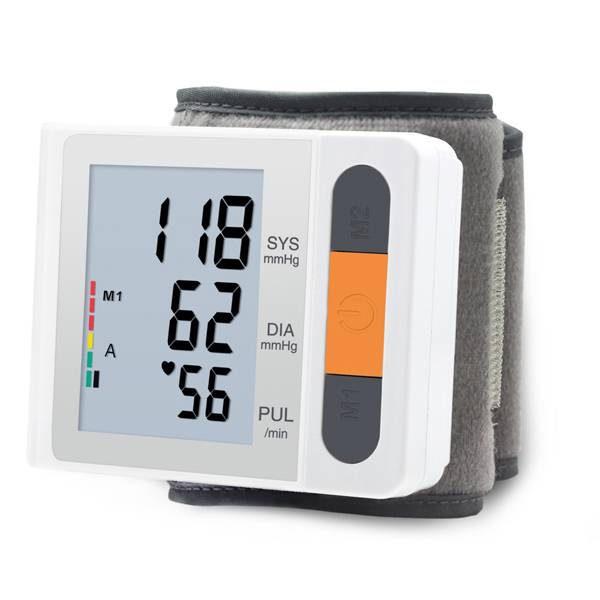
When I first unpacked the ORT750 Upper arm type blood pressure monitor, I was expecting—well—another glossy box promising “hospital accuracy.” What surprised me was the sensible mix of features: big readable LCD, quick setup, and a WHO color indicator that many customers say helps them interpret the numbers without Googling every time. Nothing flashy, just practical.
Where the market is headed
Home blood pressure monitoring has shifted from “nice-to-have” to routine care. Telehealth check-ins, hypertension programs, and employer wellness all want consistent, comparable readings. To be honest, accuracy is table stakes; usability and memory management are what keep people measuring. The ORT750 Upper arm type blood pressure monitor leans into that: two-user support with 90 records each (date and time stamped), so families don’t mix data.
Product specifications (condensed)
| Display | Large LCD, high-contrast digits for easy reading |
| Users & Memory | 2 users × 90 sets each (≈180 total), with Date & Time |
| Classification | WHO blood pressure classification indication on-screen |
| Method | Oscillometric measurement; real-world accuracy depends on cuff fit and posture |
| Cuff | Upper-arm cuff, latex-free materials; standard adult size (larger options typically available) |
How it’s built and tested
-
- Materials: ABS housing, TPU/PVC bladder, nylon cuff fabric; selected for durability and skin comfort.
- Methods: Pressure sensor with oscillometric algorithm; auto inflation/deflation valve control.
- Testing standards: Designed with reference to ISO 81060-2:2018 (non-invasive sphygmomanometers) and IEC 60601-1/-1-2 for safety and EMC; CE compliance in typical configurations.
- Service life: ≈5 years or ≈10,000 inflation cycles in lab endurance testing (actual use may vary).
- Quality controls: Lot-level calibration checks, leak tests, and repeatability assessments (mean difference aim ≈±3 mmHg vs. reference; pass rates target >95% per protocol).
Where it fits
Home users who want simple tracking; clinics needing backup screening stations; pharmacies for in-aisle readings; corporate wellness or remote hypertension programs that prefer straightforward, WHO-guided displays. It seems that the ORT750 Upper arm type blood pressure monitor hits the “easy compliance” sweet spot rather than chasing feature creep.
Advantages I noticed
-
- Readability: the large LCD is actually large—good for seniors.
- Memory for two: reduces data mix-ups at home.
- WHO indicator: quick color-coded interpretation reduces anxiety.
- Vendor flexibility: private label and cuff-size options are available in many tenders.
Vendor comparison (typical configurations)
| Model | Users/Memory | WHO Indicator | Certifications | Customization | Price Band |
|---|---|---|---|---|---|
| ORT750 Upper arm type blood pressure monitor | 2 users / 90 each | Yes | CE (typical), ISO 13485 mfg | Branding, cuff sizes, languages | Budget–Mid |
| Brand A (pharmacy line) | 1 user / 60 | No | CE | Limited | Budget |
| Brand B (premium) | 2 users / 100–120 | Yes | CE, additional claims | Moderate | Mid–High |
Customization and deployment
For tenders, the ORT750 Upper arm type blood pressure monitor can be configured with multi-language manuals, private labeling, and alternate cuff sizes. One pharmacy rollout I followed bundled a take-home logbook and saw adherence improve in the first 60 days—simple packaging wins, surprisingly.
Real-world feedback
-
- “Big screen, mom can read it without glasses.”
- “Two-user memory keeps our numbers separate.”
- “The color bar helps me know when to call my nurse.”
Origin: Room No. 1212, Gelan Business Center, No. 256 Xisanzhuang Street, Xinhua District, Shijiazhuang, Hebei, China.
Authoritative references
- ISO 81060-2:2018 Non-invasive sphygmomanometers — Clinical investigation of automated measurement type.
- WHO. Hypertension guidelines and BP classification overview.
- IEC 60601-1 and IEC 60601-1-2 Medical electrical equipment — Safety and EMC standards.
- 2023 ESH Guidelines for the management of arterial hypertension.
Oct . 20, 2025 14:11