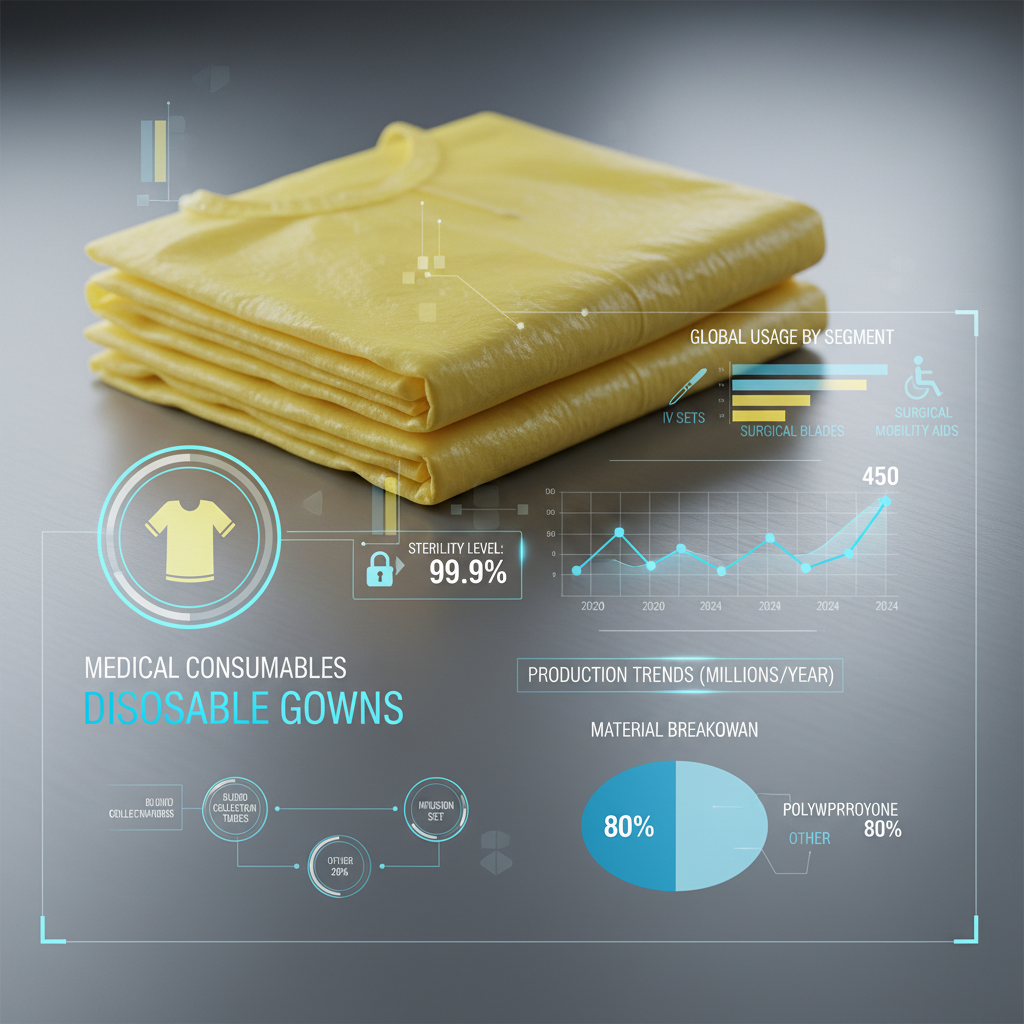
Yellow disposable gowns are a critical component of infection control and personal protective equipment (PPE) across a vast spectrum of healthcare settings, industrial applications, and emergency response situations. These gowns serve as a barrier against the spread of pathogens and hazardous materials, protecting both healthcare workers and patients, as well as personnel in diverse industries. The global demand for yellow disposable gowns has surged in recent years, driven by increasing awareness of infection prevention, stringent regulatory standards, and, notably, the COVID-19 pandemic, which highlighted the crucial role of PPE in safeguarding public health.
The significance of yellow disposable gowns extends beyond direct healthcare applications. Industries such as pharmaceuticals, food processing, and laboratories rely on these gowns to maintain sterile environments and prevent contamination. Furthermore, emergency responders and disaster relief teams utilize them in hazardous environments. The specific yellow color is often chosen for clear identification as a higher-level protection garment. Understanding the properties, standards, and appropriate uses of yellow disposable gowns is therefore essential for maintaining safety and hygiene in numerous critical sectors.
The rising demand and logistical challenges experienced during global health crises underscore the importance of robust supply chains and readily available stocks of yellow disposable gowns. This has spurred innovation in materials, manufacturing processes, and distribution networks, aimed at ensuring a reliable and sustainable supply of these essential protective garments.
The Importance of Yellow Disposable Gowns
Yellow disposable gowns are paramount in mitigating the risk of cross-contamination in environments where hygiene is non-negotiable. Their primary function is to create a protective barrier, preventing the transfer of microorganisms between patients, healthcare providers, and the surrounding environment. The selection of a yellow disposable gown signifies a need for a higher level of protection, often indicating potential exposure to infectious fluids or hazardous materials, making their consistent use crucial in a wide range of medical procedures and industrial settings.
Beyond their protective capabilities, yellow disposable gowns contribute significantly to overall infection control protocols. By providing a single-use barrier, they eliminate the need for laundering and sterilization, reducing the risk of recontamination and simplifying waste management procedures. This streamlined process enhances efficiency and minimizes the potential for human error, further solidifying their importance in maintaining a safe and sterile workspace.
Defining Yellow Disposable Gowns
Yellow disposable gowns are typically constructed from non-woven materials such as polypropylene or polyethylene, designed for single-use applications. The “disposable” nature means they are discarded after each use, preventing the build-up and potential spread of contaminants. The yellow color, as previously mentioned, is often associated with a higher level of protection, as it may indicate fluid resistance or specific barrier properties. These gowns come in various designs, including wrap-around, tie-back, and gown-shirt styles, catering to diverse needs and preferences.
Unlike reusable gowns, disposable gowns eliminate the need for extensive laundry processes, reducing water and energy consumption and minimizing the risk of damage to the fabric, which can compromise its protective qualities. They are crucial in emergency situations where rapid deployment and immediate protection are paramount, eliminating delays associated with sterilization.
Modern yellow disposable gowns are often certified to meet stringent industry standards, such as those established by the Association for the Advancement of Medical Instrumentation (AAMI) and the European EN standards, ensuring their effectiveness in preventing the transmission of infectious agents.
Key Characteristics of Yellow Disposable Gowns
Durability is a cornerstone characteristic of quality yellow disposable gowns. While designed for single-use, they must withstand the rigors of typical clinical or industrial use without tearing or compromising the protective barrier. This durability is influenced by the material’s weight (measured in grams per square meter – GSM) and the manufacturing process used. Higher GSM values generally indicate greater strength and resistance.
Fluid resistance is another critical factor. Many yellow disposable gowns are treated to repel liquids, protecting the wearer from splashes and sprays of potentially infectious materials. Fluid resistance is categorized by different levels, with AAMI standards defining levels 1 through 6, indicating the amount of fluid penetration resistance. Gowns intended for high-risk situations require higher fluid resistance levels.
Breathability is also important for user comfort, particularly during prolonged wear. Non-woven materials allow air to circulate, preventing overheating and reducing perspiration, which can lead to discomfort and potentially compromise the barrier properties. Achieving a balance between fluid resistance and breathability is a key challenge in gown design.
Global Applications and Industry Standards
Yellow disposable gowns find widespread application across numerous sectors globally. In healthcare, they are used in operating rooms, isolation wards, emergency departments, and laboratories, safeguarding healthcare professionals during procedures involving potential exposure to bloodborne pathogens or infectious diseases. Beyond hospitals, they are essential in dental practices, veterinary clinics, and long-term care facilities.
Industrially, yellow disposable gowns are vital in pharmaceutical manufacturing, food processing plants, and chemical handling facilities, preventing contamination of products and protecting workers from hazardous substances. They are also crucial in forensic science applications and in conducting research in biological laboratories. The demand in post-disaster relief operations and remote medical missions highlights their logistical advantages.
Adherence to international standards is paramount. The AAMI PB70 standard, for instance, provides guidelines for the classification of protective barrier performance, assessing liquid penetration and impact resistance. The European EN 13795 standard defines requirements for protective clothing, including gowns. Compliance with these standards ensures that yellow disposable gowns meet specific performance criteria and provide the intended level of protection.
Yellow Disposable Gown Performance Metrics
Advantages and Value Proposition
The primary advantage of yellow disposable gowns lies in their ability to significantly reduce the risk of healthcare-associated infections (HAIs) and occupational exposure to hazardous materials. This translates to improved patient outcomes, reduced healthcare costs, and enhanced worker safety. The single-use nature eliminates the need for laundering, saving time and resources.
Furthermore, the consistent quality and performance guaranteed by adherence to industry standards provide a reliable level of protection. The cost-effectiveness of disposable gowns, particularly when considering the long-term costs associated with infections and worker illness, makes them a financially prudent choice for many organizations.
Future Trends and Material Innovations
The future of yellow disposable gowns is likely to be shaped by a growing emphasis on sustainability and the development of more environmentally friendly materials. Research is ongoing into biodegradable and compostable alternatives to traditional polypropylene and polyethylene, aiming to reduce the environmental impact of disposable PPE.
Smart textiles incorporating antimicrobial agents or sensors to detect breaches in the barrier are also being explored. These innovations could provide real-time monitoring of gown integrity and enhance protection. The integration of digital traceability systems, utilizing QR codes or RFID tags, will likely improve supply chain transparency and ensure the authenticity of gowns.
Advances in manufacturing techniques, such as 3D printing, may enable the production of customized gowns tailored to specific needs and body types, further enhancing comfort and protection.
Challenges and Sustainable Solutions
One of the major challenges associated with yellow disposable gowns is the environmental impact of their disposal. Traditional materials are not biodegradable, contributing to landfill waste. Addressing this requires a shift towards sustainable materials and the development of robust recycling programs.
Supply chain disruptions, as experienced during the COVID-19 pandemic, also pose a significant challenge. Diversifying sourcing and investing in domestic manufacturing capabilities can enhance supply chain resilience. Ensuring equitable access to these essential protective garments, particularly in low-income countries, is another critical concern.
Innovative solutions include exploring closed-loop recycling systems, where used gowns are collected, processed, and repurposed into new materials, and promoting the use of reusable gowns in situations where they are appropriate and can be effectively sterilized. Investing in research and development of sustainable materials will be vital for minimizing the environmental footprint of yellow disposable gowns.
Summary of Yellow Disposable Gown Analysis
| Material Composition |
Fluid Resistance Level |
Sustainability Impact |
Cost Effectiveness |
| Polypropylene (most common) |
Level 1-4 (depending on variant) |
Low - contributes to landfill waste. |
High - cost per use is minimal |
| Polyethylene |
Level 2-3 |
Low - similar to polypropylene |
Moderate - slightly higher than polypropylene |
| Biodegradable Polymers (emerging) |
Level 1-2 (currently limited) |
High - reduces landfill impact |
Moderate to High - potentially higher initial cost |
| SMS (Spunbond-Meltblown-Spunbond) |
Level 3-4 |
Low - similar to polypropylene |
High - good balance of protection and cost |
| Spunlace |
Level 1-2 |
Low - similar to polypropylene |
Moderate - softer and more comfortable |
| Composite Materials |
Level 4-6 (potentially) |
Variable - depending on components |
High - can offer superior protection |
FAQS
While both yellow and blue disposable gowns offer protection, the yellow color generally indicates a higher level of fluid resistance, making them suitable for situations where there's a greater risk of splashes or sprays. Blue gowns typically offer basic barrier protection, while yellow gowns adhere to stricter standards for fluid penetration, offering greater protection against infectious materials. Understanding these distinctions is crucial for selecting the appropriate gown for specific clinical or industrial applications.
Yellow disposable gowns should be treated as regulated medical waste and disposed of according to local, state, and federal regulations. This typically involves placing them in designated biohazard containers or red bags. Improper disposal can pose a risk of infection and environmental contamination. Always adhere to established protocols for waste segregation and disposal within your healthcare facility or organization.
The appropriate AAMI level depends on the risk of fluid exposure. For low-risk situations, AAMI Level 1 or 2 may be sufficient. For moderate-risk situations, Level 3 is recommended. For high-risk situations involving significant splashes or sprays of blood or body fluids, AAMI Level 4 is crucial. Always assess the potential hazards of the procedure or task and select a gown that provides adequate protection. yellow disposable gowns can provide a wide variety of levels.
No, yellow disposable gowns are designed for single-use only. Reusing these gowns compromises their protective barrier and significantly increases the risk of contamination. The materials are not designed to withstand repeated laundering or sterilization processes. Always dispose of a gown after each use to maintain the integrity of infection control protocols.
The most common materials used in yellow disposable gowns are polypropylene and polyethylene. These non-woven fabrics provide a balance of fluid resistance, breathability, and cost-effectiveness. Some gowns may also incorporate SMS (Spunbond-Meltblown-Spunbond) fabrics for enhanced barrier properties. Emerging materials include biodegradable polymers, offering a more sustainable alternative.
A proper fit is essential for maximizing protection. Ensure the gown fully covers your torso, extends to your wrists, and overlaps in the back. Secure any ties or closures tightly but comfortably. Sleeves should fully cover the arms. If the gown is too loose or too tight, it may compromise its protective barrier. Different sizes are available to accommodate various body types.
Conclusion
Yellow disposable gowns are indispensable tools in preventing the spread of infection and ensuring safety across diverse industries. Their single-use nature, combined with adherence to rigorous standards and ongoing innovation, makes them a cornerstone of modern infection control and personal protection. By understanding their key characteristics, applications, and limitations, we can optimize their use and safeguard both individuals and communities.
Looking ahead, prioritizing sustainability through the development of biodegradable materials and implementing efficient recycling programs will be crucial for minimizing the environmental impact of these essential garments. Continuous research and development of advanced materials and designs will further enhance their protective capabilities and user comfort, ensuring they remain a vital component of a safe and healthy future. Visit our website at www.orientmedicare.com to explore our range of yellow disposable gowns and related PPE solutions.